Biography, career and fields of interest
About
Biography
Ivan Nagornyak is a Kyiv-based public policy expert specialising in Ukraine's European integration. He is a Policy Fellow at the European Policy Institute in Kyiv (EPIK) and an Expert Partner and EU accession expert at CIVITTA and EasyBusiness. In 2025 and 2026 he served as a pro bono adviser to Ukraine's Deputy Prime Minister for European and Euro-Atlantic Integration. His work focuses on EU enlargement policy and methodology, Ukraine's accession negotiations, staged and sectoral integration into the Single Market, and the institutional capacity that membership requires of government, parliament and civil society.
Between 2020 and 2024 he served in the Ukrainian government, first as Adviser to the Deputy Prime Minister for European and Euro-Atlantic Integration and then as Deputy Director General of the Government Office for Coordination of European and Euro-Atlantic Integration at the Secretariat of the Cabinet of Ministers. In that capacity he coordinated the comprehensive review of the EU-Ukraine Association Agreement, led the preparation of Ukraine's application for EU membership and the response to the European Commission's questionnaire in 2022, and oversaw the implementation of the seven reform steps required to open accession negotiations, managing a team of more than forty.
With EasyBusiness and the Centre for Economic Recovery he co-organised Ukraine's first civil-society EuroSummit in 2024 and supported launching of the EuroHub initiative, a platform for cooperation between NGOs and government in preparing for the negotiations. He also contributed to the Enlargement Hub project of the CEU Democracy Institute on the governance of EU enlargement. Earlier he worked as a specialist on the EU-funded Association4U project in support of the Government Office.
He holds a PhD (Candidate of Political Sciences) from the Institute of International Relations of Taras Shevchenko National University of Kyiv, where his dissertation examined the EU's Eastern Partnership, a master's degree in International Relations from Vasyl Stefanyk Precarpathian National University and a bachelor's degree in Law from Lviv State University of Internal Affairs. He studied at the University of Warsaw on a scholarship of the Polish Ministry of Foreign Affairs and completed executive training at LSE IDEAS.
His analysis has appeared in Foreign Policy, The Kyiv Independent, European Pravda, ZN.ua, NV, VoxUkraine, New Eastern Europe, Visegrad Insight and The Loop (ECPR), and he comments regularly for Ukrainian and international media.
Career
-
2025 - present
Policy FellowEuropean Policy Institute in Kyiv (EPIK)
-
current
Expert Partner / EU accession expertCIVITTA / EasyBusiness
-
2025 - 2026
Pro bono adviserDeputy Prime Minister for European and Euro-Atlantic Integration of Ukraine
-
2022 - 2024
Deputy Director GeneralGovernment Office for Coordination of European and Euro-Atlantic Integration, Secretariat of the Cabinet of Ministers of Ukraine
-
2020 - 2022
Adviser to the Deputy Prime Minister for European and Euro-Atlantic IntegrationCabinet of Ministers of Ukraine
-
2017 - 2020
Specialist, EU project Association4UIn support of the Government Office for Coordination of European and Euro-Atlantic Integration
Education
-
2019
PhD (Candidate of Political Sciences)Institute of International Relations, Taras Shevchenko National University of Kyiv
-
2015
Scholarship of the Polish Ministry of Foreign AffairsUniversity of Warsaw
-
2013
MA in International RelationsVasyl Stefanyk Precarpathian National University
-
BA in LawLviv State University of Internal Affairs
-
Executive trainingLSE IDEAS, London School of Economics
Fields of interest
The questions I work on, in policy and in research.
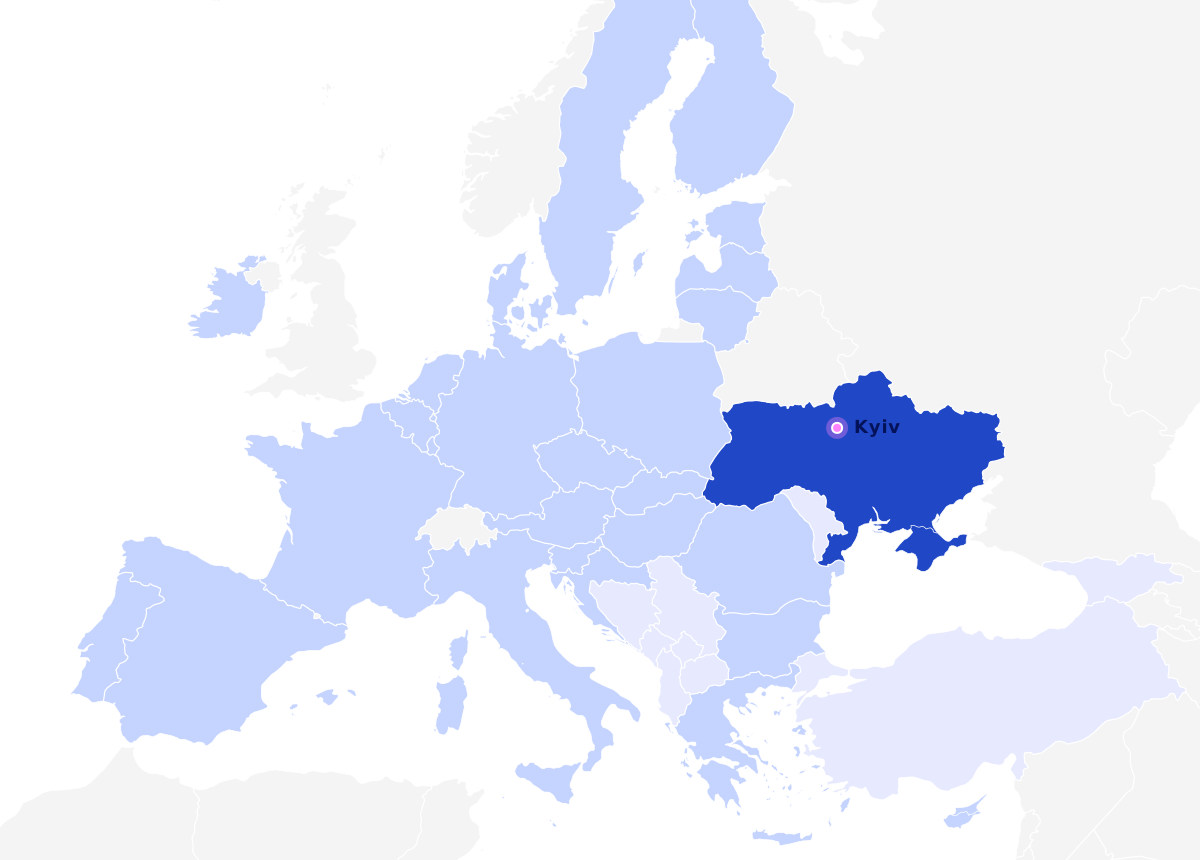
- EU member states
- Candidate countries
- Ukraine
EU enlargement policy and methodology
How the Union's enlargement method works in practice: the revised methodology, clusters and chapters, negotiating frameworks, Enlargement Reports and the incentives and sanctions that shape a candidate's path. What a reformed enlargement policy should look like for the Union of thirty and more.
Ukraine's accession negotiations
Screening, the Fundamentals cluster, conditionality and the sequencing of reforms from candidate status to an Accession Treaty. Tracking what Kyiv must deliver, what Brussels and the member states owe in return, and how to keep the process moving while the country is at war.
Staged and sectoral integration into the Single Market
Designing accession models that deliver benefits before membership without creating a permanent second tier: sectoral integration into customs, energy, digital and industrial frameworks, 'EEA+' style arrangements and the political economy of gradual Single Market access.
Institutions for European integration
The machinery a candidate needs to become a member state: the coordinating role of the Government Office, parliamentary oversight and a Verkhovna Rada presence in Brussels, civil-service reform and structured participation of civil society in the negotiations.
The Association Agreement and trade integration
Implementation and review of the EU-Ukraine Association Agreement, the DCFTA and its trade parameters, the transition to the EU's common commercial policy and the treatment of Ukraine under instruments such as CBAM.
The Eastern Partnership and the EU's eastern neighbourhood
The field of his doctoral research: the institutional design of the European Neighbourhood Policy and the Eastern Partnership, their limits for membership-seeking countries, and how the neighbourhood policy gave way to an enlargement track after 2022.
Europe's future and Ukraine's contribution
Enlargement as a strategic interest of the Union: Ukraine's contribution to European competitiveness, energy, food and critical raw materials, the financing of reconstruction alongside the EU's own investment needs, and, as a consequence of integration, the security order of a wider Europe.